
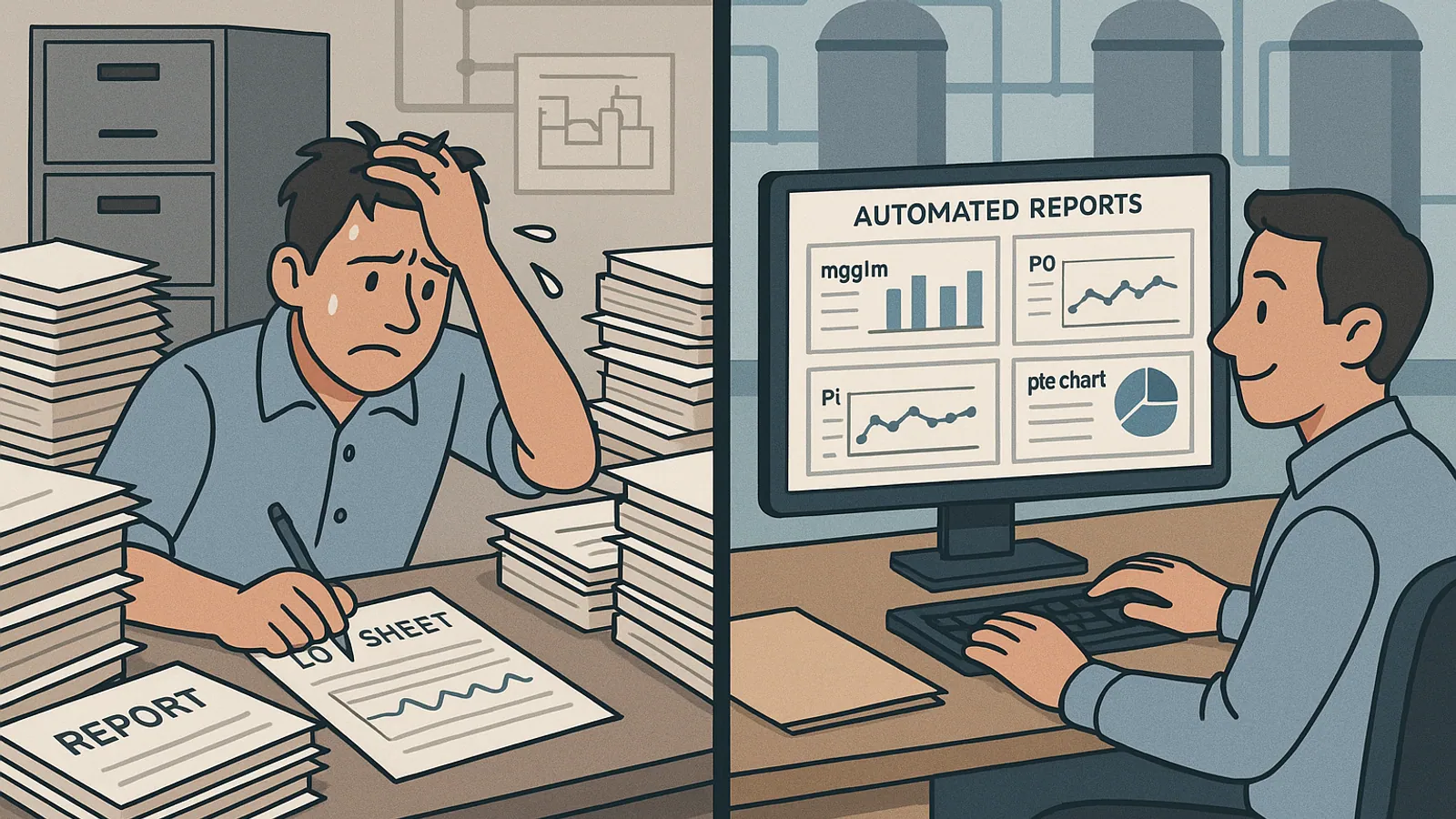
Plant operators and compliance managers know that regulatory reporting is one of the most time-consuming and error-prone aspects of plant management. Manual reporting processes for NPDES, Discharge Monitoring Reports (DMRs), and Monthly Operating Reports (MORs) can consume dozens of hours each month, diverting valuable technical staff from more critical operational tasks.
The Hidden Cost of Manual Reporting
The traditional approach to water quality and discharge reporting creates significant operational burdens. Manual reporting workflows typically involve:
- Collecting data from multiple disparate sources (SCADA, lab results, operator logs)
- Manually transcribing values into spreadsheets or reporting forms
- Performing calculations to derive reportable values like averages and maximums
- Checking for transcription errors and validation issues
- Reformatting data to meet specific regulatory requirements
This process is not only time-consuming but introduces numerous opportunities for errors that can lead to compliance issues, repeated work, and potential regulatory penalties.
The Automation Opportunity
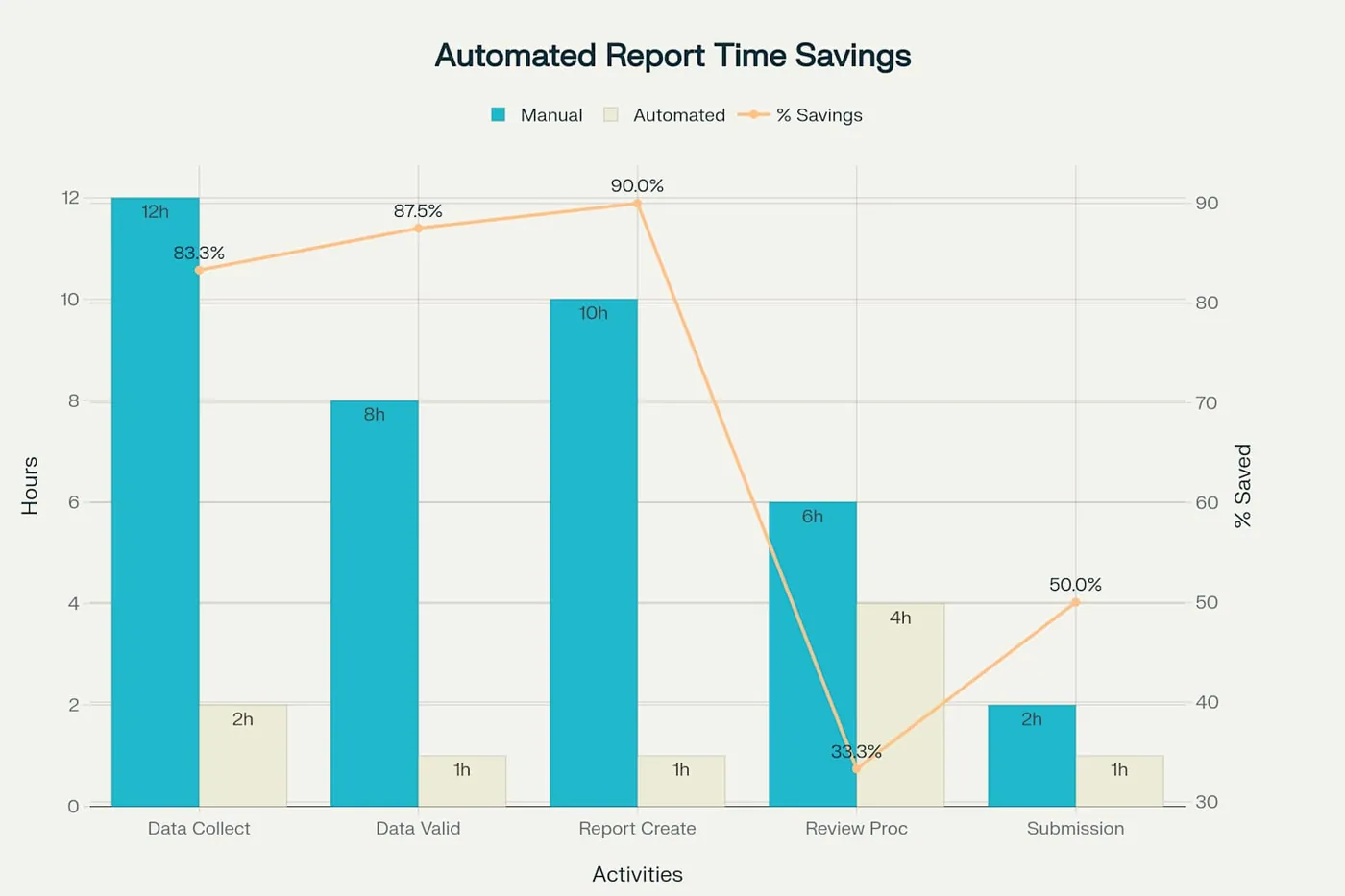
Modern water treatment facilities are increasingly turning to automated reporting solutions to eliminate manual processes. Effective automation can reduce reporting time by up to 80% while improving accuracy and creating comprehensive audit trails.
Key areas for automation include:
1. Data Collection and Integration
Automated systems can collect and integrate data from multiple sources without manual intervention:
- SCADA system readings for continuous monitoring parameters
- Laboratory information management systems (LIMS) for analytical results
- Operator input for qualitative observations and manual readings
- Historical databases for trend analysis and compliance tracking
2. Calculations and Statistical Analysis
Reports typically require various calculations and statistical treatments that can be fully automated:
- Daily, weekly, and monthly averages
- Rolling averages for compliance parameters
- Maximum and minimum values over reporting periods
- Compliance status determination based on permit limits
3. Report Generation and Submission
The final stages of report creation and regulatory submission offer significant automation opportunities:
- Automatic population of regulatory forms with calculated values
- Electronic submission to regulatory portals like EPA's NetDMR
- Digital signature workflows for required certifications
- Archival of submitted reports with complete audit trails
Implementing Automated Reporting: A Step-by-Step Approach
Transitioning to automated reporting requires thoughtful planning and implementation. Follow these steps to maximize success:
1. Audit Current Reporting Requirements
Begin by documenting all current reporting obligations and workflows:
- Identify all required reports and their frequencies
- Document data sources for each reportable parameter
- Map the current process from data collection to submission
- Quantify time spent on each reporting activity
2. Identify Integration Points
Determine how your existing systems can feed into an automated reporting solution:
- Assess SCADA system data export capabilities
- Evaluate laboratory data management systems
- Identify parameters requiring manual input
- Document calculation methodologies for derived values
3. Select the Right Automation Solution
Choose a reporting solution that aligns with your specific needs:
- Consider cloud-based vs. on-premises deployment
- Evaluate regulatory form auto-population capabilities
- Assess system security and data validation features
- Verify compatibility with regulatory submission portals
4. Implement with Parallel Validation
During initial implementation, run automated and manual processes in parallel:
- Compare automated outputs with manual calculations
- Validate data transfers from source systems
- Verify regulatory compliance of automated reports
- Document any discrepancies and their resolutions
How Pani Transforms Regulatory Reporting
Pani's operations intelligence platform includes powerful automated reporting capabilities specifically designed for desalination and water treatment facilities. By seamlessly integrating with existing SCADA systems and laboratory databases, Pani streamlines the entire reporting workflow.
Key features include:
- Automated data collection from both SCADA and laboratory sources
- Pre-configured calculations for common regulatory requirements
- Built-in templates for NPDES, DMR, and MOR reporting
- Secure electronic submission to regulatory authorities
Case studies demonstrate that facilities implementing Pani's reporting automation typically achieve:
- 80-90% reduction in time spent on report preparation
- Virtual elimination of transcription errors
- Complete digital audit trails for regulatory compliance
- Improved staff satisfaction through elimination of tedious manual tasks
Conclusion: Beyond Time Savings
While the immediate benefit of automated reporting is time savings, the advantages extend far beyond efficiency. Automated reporting also delivers:
- Improved data accuracy and compliance confidence
- Better resource allocation of technical staff
- Reduced compliance risk through validation and verification
- Enhanced ability to identify and address operational trends
By implementing automated reporting solutions like Pani's platform, desalination facilities can transform regulatory reporting from a burdensome obligation into a valuable operational tool that enhances both compliance and performance.
Contact our team to see how Pani's automated reporting can cut the time your plant spends on water quality reports.